It is the first question almost every car owner asks before investing in paint protection film: how long will it actually last here? In a city where summer temperatures pass 45 °C, the sun is strong all year and fine sand is always in the air, it is a fair question.
The short answer: a quality, professionally installed PPF typically lasts around 5 to 10 years in the UAE. Where your car ends up in that range depends on the film you choose, how it is installed, where the car is parked and how it is cared for. Here is what really makes the difference.
What the warranty tells you
Premium film manufacturers back their PPF with long warranties — XPEL, for example, offers a 10-year warranty on its Ultimate Plus film in the Middle East. A warranty like that is a good signal of how the film is engineered to perform: it should not yellow, crack, blister or peel during that period when it is installed and cared for correctly.
Keep in mind that a warranty covers defects in the film, not damage from accidents, harsh chemicals or poor maintenance — and it only means something if the film is a genuine, recognised product installed by a trained team. Always ask which film is being used and get the warranty details in writing.
How the UAE climate affects PPF
UV and heat
Intense, year-round UV is the biggest long-term challenge. Lower-grade films can break down under UV and slowly turn yellow or hazy. Quality films are made from aliphatic TPU with UV inhibitors and a protective top coat, which is what allows them to stay clear for years. Heat on its own is not an enemy — in fact it helps the self-healing top coat recover from light scratches — but constant heat combined with UV ages any material faster.
Horizontal panels age first
The bonnet, roof and boot lid face the sun directly for hours every day, so they receive far more UV than the doors or bumpers. On cars that are always parked outside, these are the panels where any wear shows first.
Sand, dust and stone chips
Sand blasting at highway speed and gravel from construction zones are exactly what PPF is designed to absorb. Every impact the film takes is one the paint does not — but heavy abrasion over many years does gradually wear the top layer, especially on the front bumper and bonnet.
Environmental contaminants
Bird droppings, bug splatter, tar and industrial fallout are more aggressive in the heat. Left to bake on the surface, they can stain the top coat of the film. Removed quickly, they cause no lasting harm.
What makes PPF last longer
- Choose a premium film. Aliphatic TPU with UV stabilisers and a self-healing top coat. Budget and unbranded films are far more likely to yellow early.
- Insist on proper preparation and installation. Clean, decontaminated and corrected paint, precise cutting and carefully wrapped edges make the film bond properly and stop edges from lifting.
- Park in the shade. A covered parking spot or a shaded area reduces UV exposure more than any product can.
- Wash regularly — and gently. Hand wash with a pH-neutral shampoo and clean microfibre mitts. Avoid automatic brush washes and keep pressure washers away from film edges.
- Remove contaminants quickly. Do not let bird droppings or bug splatter sit in the sun.
- Add a ceramic coating on top. A ceramic coating designed for PPF adds an extra layer of UV and chemical resistance, makes the film easier to clean and keeps it glossy.
Signs your PPF needs replacing
Even the best film eventually reaches the end of its life. These are the signs to look out for:
- Yellowing or a cloudy, hazy look that does not wash off
- Cracking, bubbling or blistering on the surface
- Edges lifting or collecting dirt
- Deep scratches or chips in the film that no longer self-heal
Surface staining can often be removed with a deep clean or decontamination, so it is worth having the car inspected before deciding. Yellowing that is inside the film itself cannot be reversed — the film needs to be replaced.
What happens when the film is removed?
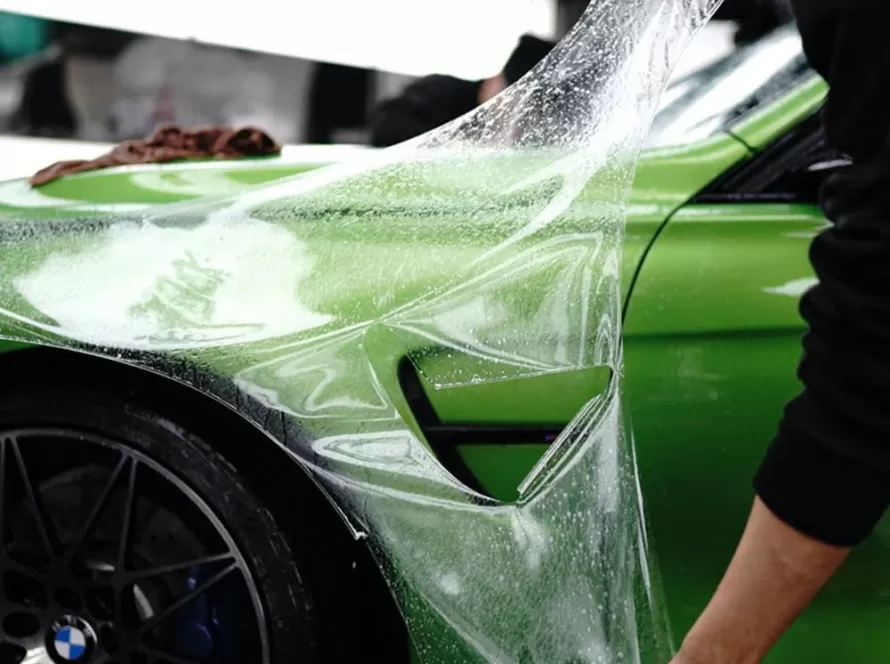
When a quality PPF is removed by a professional — usually with gentle heat and the right technique — the factory paint underneath should be in the same condition it was when the film was installed. That is the real value of PPF in the UAE: years of sun, sand and stone chips hit the film, not your paint. New film can then be installed straight away.
Frequently asked questions
Does PPF turn yellow in the UAE?
Low-grade films can. Premium aliphatic TPU films with UV inhibitors are designed to stay clear for the length of their warranty. Choosing the right film is the single most important decision.
Does parking outside shorten the life of PPF?
Yes, constant direct sun speeds up ageing, especially on the bonnet and roof. Shaded or covered parking noticeably extends the life of the film.
Can I take my car through an automatic car wash?
We recommend avoiding brush-type automatic washes. They can scratch the film and lift edges. Hand washing, or a touchless wash, is much safer.
Is it worth adding ceramic coating over PPF?
For most cars in the UAE, yes. The coating adds UV and chemical resistance, makes sand and dust easier to rinse off and keeps the film looking glossy. Read more in our complete guide to PPF in Dubai.
Long-lasting protection at High Touch Automotive
At High Touch Automotive in Al Quoz Industrial Area 2, Dubai, we start every PPF job with an inspection, prepare the paint properly and apply the film by hand in our studio, with edges wrapped wherever the panel allows. You leave with clear aftercare instructions and the warranty details written in your quote. See our Paint Protection Film options or request a quote on WhatsApp.